
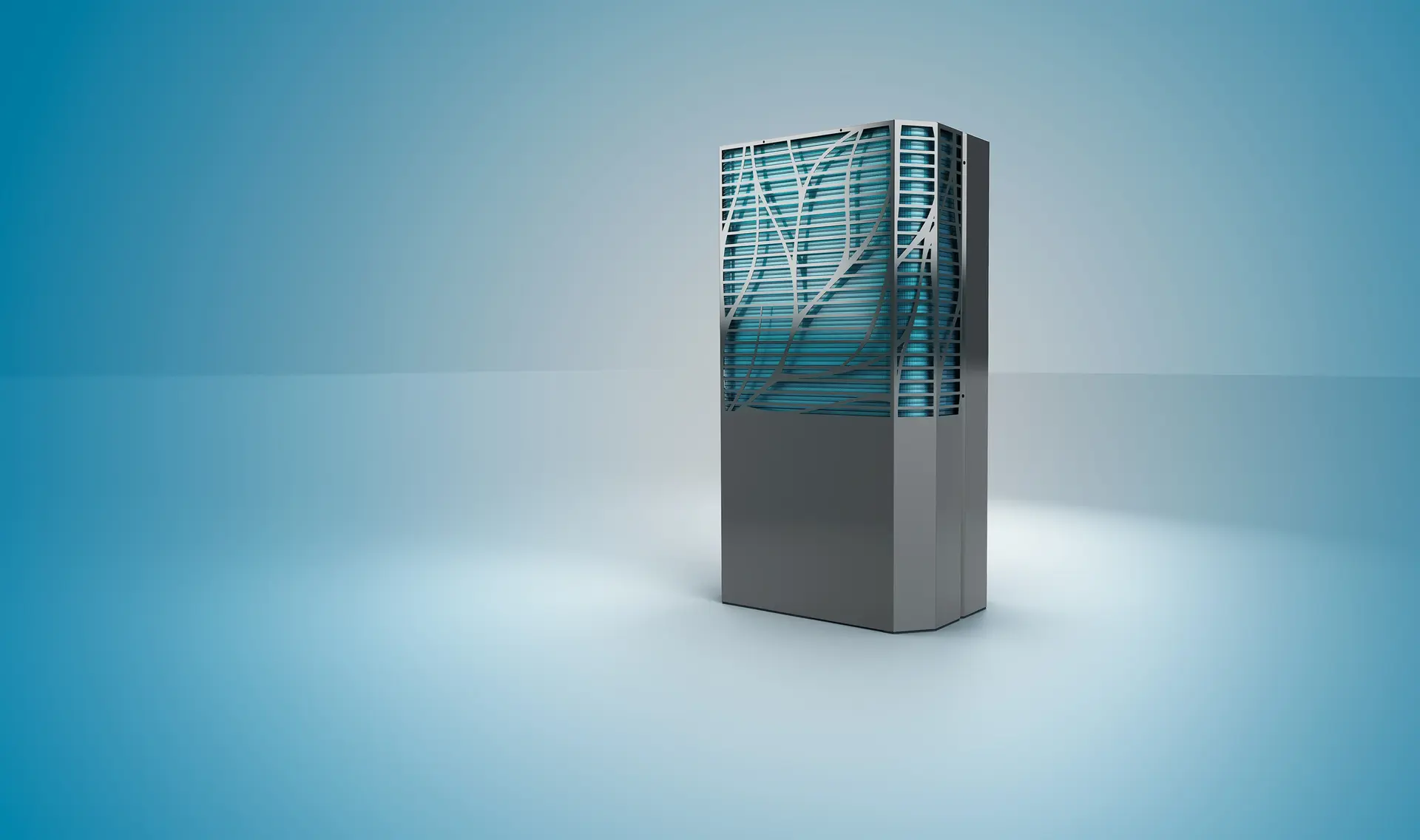

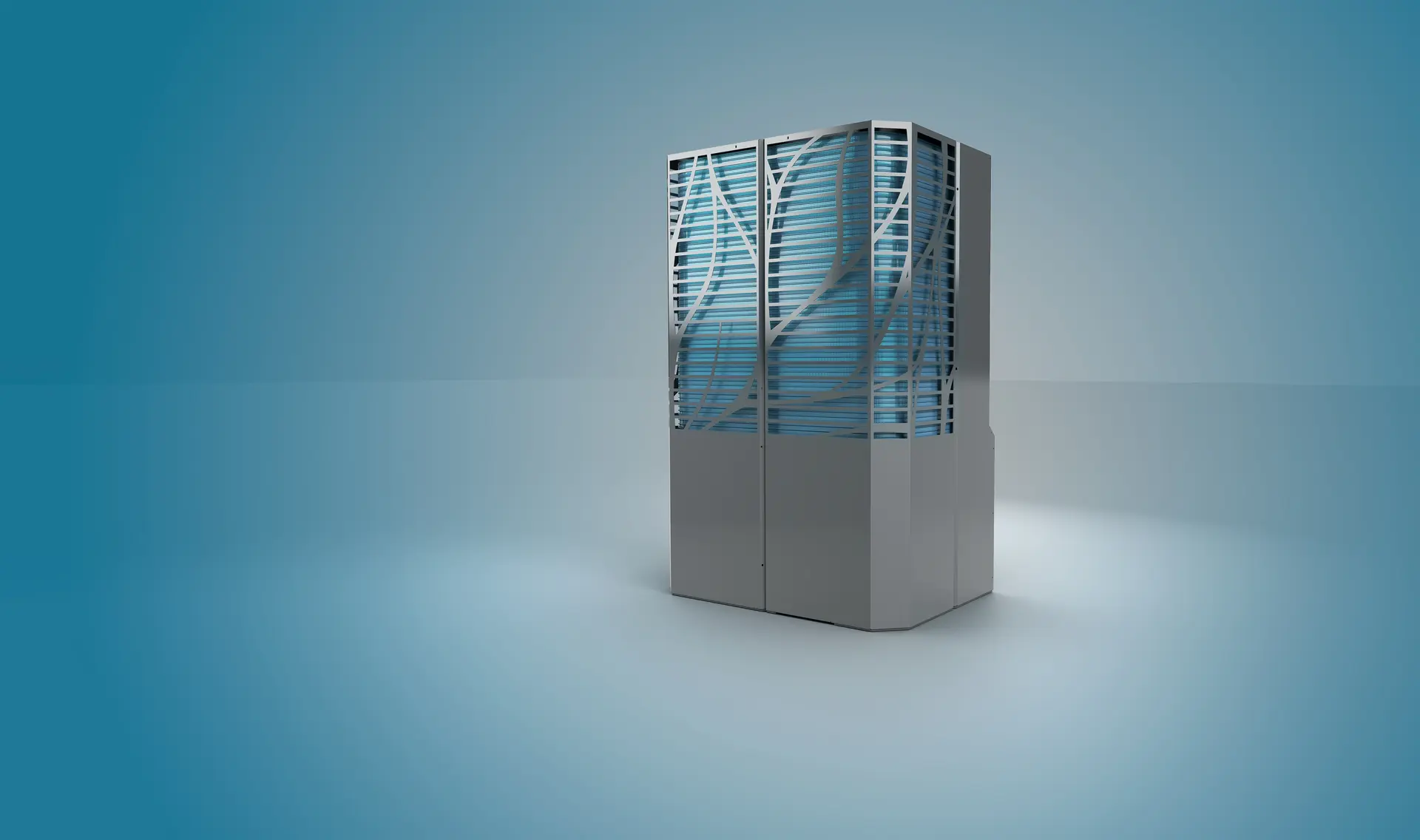
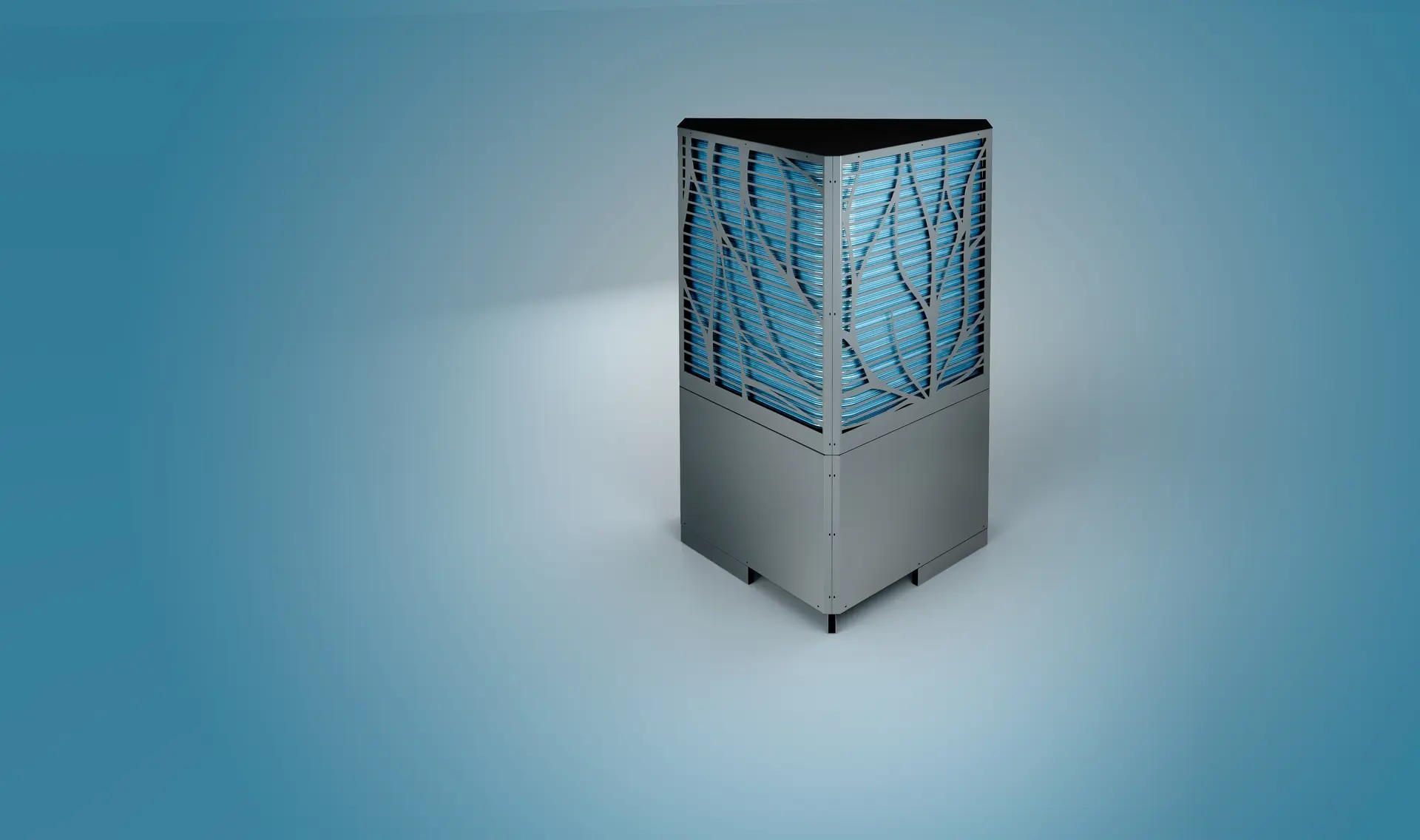
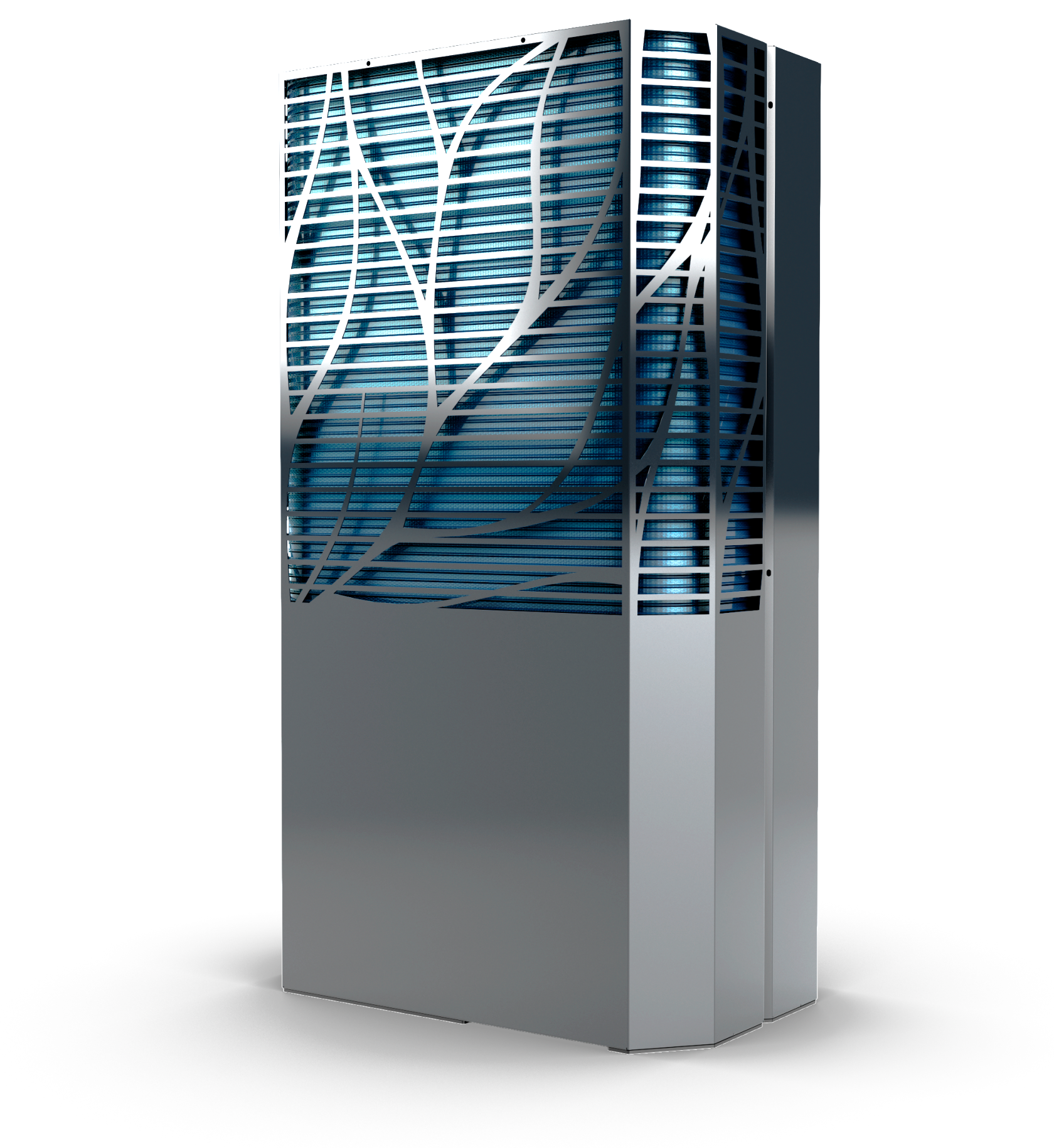
EUREKA Air Series
LAMBDA Heat Pumps is a multi-award-winning technology leader in energy-efficient air-source heat pumps. Our product range stands for innovation, quality, and sustainability—it heats and cools efficiently, reduces energy costs, and protects the environment. The Eureka-Luft series saves up to 30% in operating costs compared to the highest energy efficiency standard, A+++, making it more efficient than 97% of all ground-source heat pumps.
Energy Efficiency - The 3K Process® as the Industry Standard
The successful implementation of the 3K Process® for heat pumps has marked a quantum leap in the industry. As a result, LAMBDA heat pumps are among the most energy-efficient in their class. Thanks to optimized and patented fluid dynamics, we have succeeded in significantly improving heat transfer → by a factor of four to six.
High temperatures for new construction and existing buildings
Not just for new construction our heat pumps are designed for operating temperatures of up to 70°C. This allows us to ensure effective thermal protection against Legionella, a higher efficiency for your PV system, and high flow temperatures in existing buildings.
Natural refrigerant propane (R290)
For us, sustainability isn’t just about developing highly efficient heat pumps; it’s also reflected in our consistent use of the natural refrigerant propane (R290). With a Global Warming Potential (GWP) of just 3, we’re not only saving you money but also helping to protect the climate. By comparison, the widely used refrigerant R410a has a GWP of 1920.
Find an installation partner for LAMBDA heat pumps
Are you looking for an installation partner near you who can install our LAMBDA heat pumps? Use our new Partner Finder to find the installer nearest you right away.
Frequently Asked Questions
LAMBDA heat pumps are sold through our authorized dealers.
You can search for a specialist partner using our Partner Finder. If that doesn’t work, please feel free to contact us via our contact form or by email.
Despite significantly higher efficiency, LAMBDA heat pumps are priced at roughly the same level as similar competing products. This outstanding value for money stems from the high heat transfer achieved through the 3K process, which has allowed us to keep material costs for air heat exchangers relatively low. Furthermore, our motto is: More machine, less housing. We prefer to invest in high-quality, well-dimensioned refrigeration circuit components rather than in expensive designs.
When comparing products, the model designation is often misleading. The model designation of our heat pumps is based on the maximum output at an outdoor temperature of -10°C. For most other heat pump manufacturers, the model designation corresponds to the maximum output at an outdoor temperature of 2°C or 7°C.
The ideal installation location for an air-source heat pump depends on several factors.
The following points should be considered when selecting an installation location for an air-source heat pump:
- Compliance with safety zones (e.g., no basement shafts or ignition sources within a 1-meter radius)
- Free air circulation (avoidance of niches, obstacles, depressions, and obstructions in front of the heat pump, etc.) to ensure efficiency and reduce noise
- Connection lines to the boiler room should be as short as possible
- Accessibility for servicing
- Noise pollution (compliance with required distances to neighboring properties based on noise calculations, distance from bedroom windows or quiet areas)
Yes! LAMBDA heat pumps offer a wide range of hydraulic systems and accessories.
These include solutions that are perfectly tailored to our heat pumps, such as buffer tanks, hygiene tanks, domestic hot water tanks, combination tanks, and fresh water systems.
New subsidies for heat pumps approved

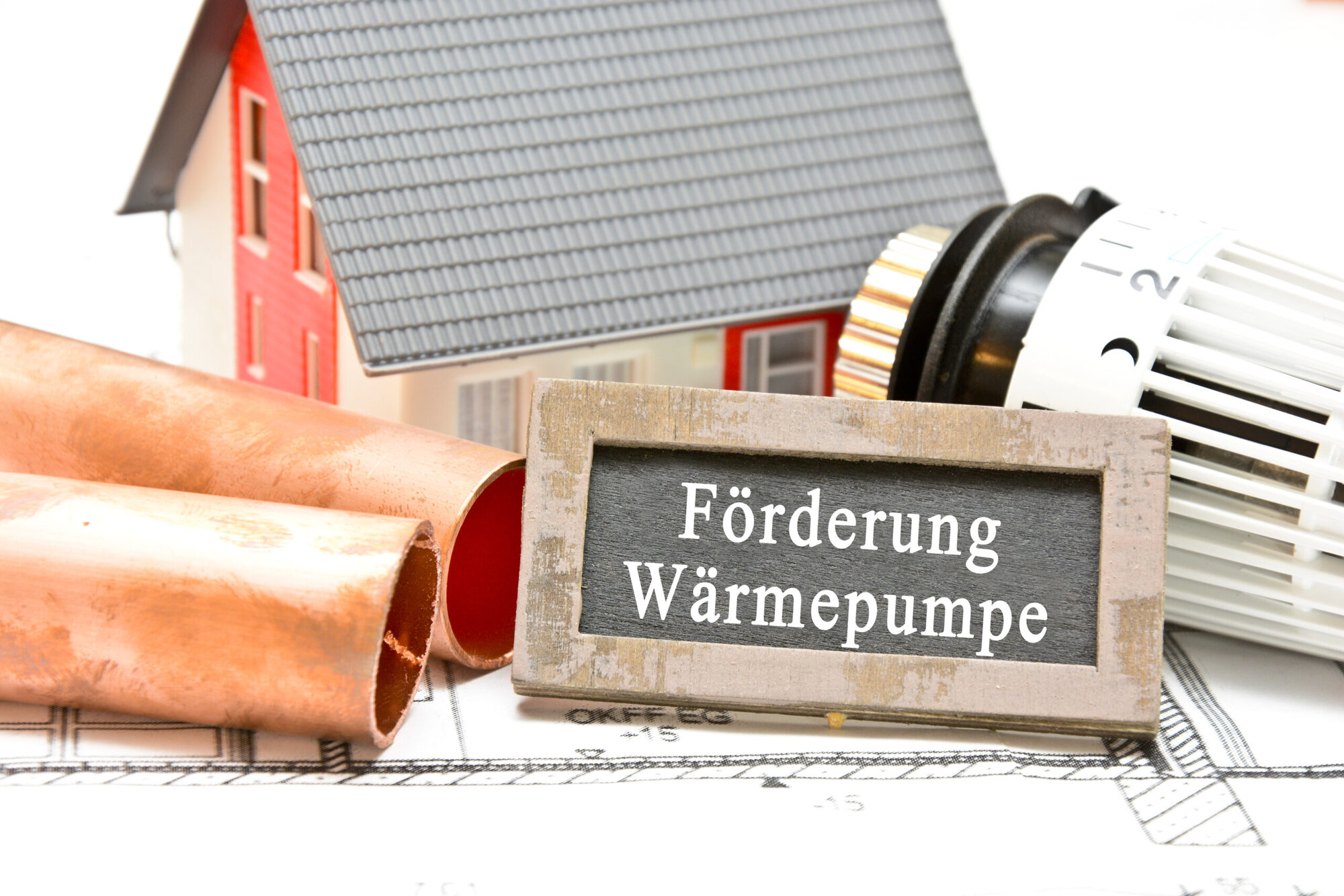
Starting in 2024, Austria has a new subsidy framework for heating system replacements and thermal retrofits. We explain what is eligible for subsidies, how the program works, and what changes are coming regarding heat pumps.
The future of heating technology clearly lies in efficiency and sustainability—which is why heat pumps are of great importance for the heating transition. In 2022, for the first time, more renewable heating systems were installed in Austria than fossil fuel-based ones—reason enough for the government to provide the necessary impetus.
Despite the government’s announcement, the mandatory phase-out of gas and oil heating systems by 2040 will not happen after all. The ÖVP and the Greens had been wrangling over the Renewable Heat Act (EWG) for a good two years; now the motto is: incentives instead of bans. Instead of dictating to homeowners when and how they must heat their homes, the transition in the heating market is to be achieved through generous subsidies starting January 1, 2024. And this also applies to heat pumps.
The key points
- When replacing a heating system, federal and state subsidies cover up to 75 percent of the costs for a new system. This applies to single-family and two-family homes as well as multi-story residential buildings. The general rule of thumb is: the higher the investment costs for a climate-friendly heating system, the higher the subsidy. Example: A geothermal heat pump is more expensive than a district heating connection
- The subsidy amount for air-to-water heat pumps is 75% of the total cost, up to a maximum of €16,000. If the units are operated with climate-damaging refrigerants, the subsidy rate is significantly reduced.
- Subsidies are available not only for the equipment itself but also for the removal and disposal of old systems and their integration into the heating system.
- The permissible flow temperature for heat pumps is being increased from 40°C to 55°C—a long-standing demand of the industry.
Other new features:
- Starting in January, oil and gas heating systems will be banned in new buildings.
- The “Clean Heating for All” subsidy program will be significantly expanded. Low-income households will receive 100% funding.
- The federal government’s flat-rate subsidies for thermal building retrofitswill be tripled.
For more details on all changes regarding the EWG, please refer to this PDF: